

help centre

how can we help?

Quick answers about our grow lights, hydroponic gardens and growing at home. Can't find it? Our Sydney team is happy to help.

no matches for that search

Try a different word, or ask our team and we'll get back to you.

Grow lights

How many hours a day should I run my grow light?

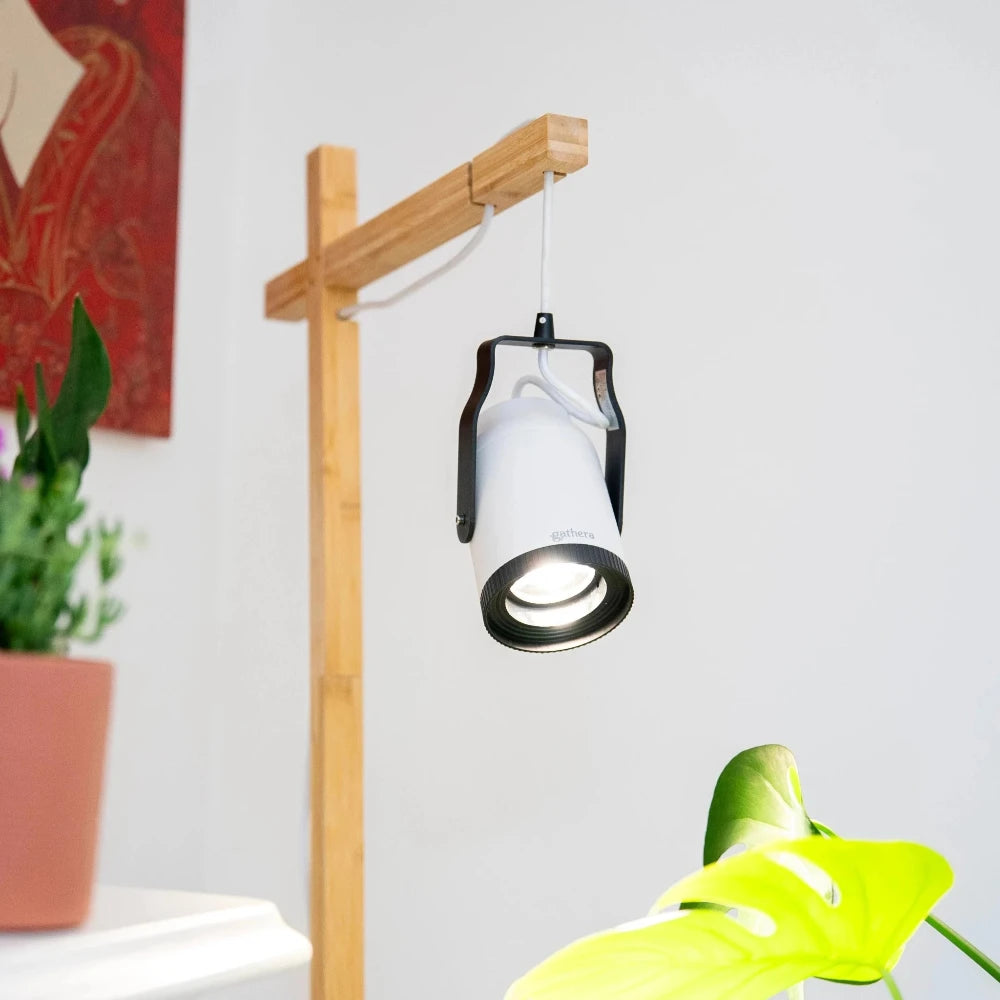
It depends on how much natural light the spot already gets. For our clip-on lights we suggest about 12 hours a day in low-light spaces, fewer where there is indirect natural light, and as little as 3 hours in bright, naturally lit spots. Light-hungry herbs like basil will want more than a typical houseplant.

Start on a dim setting and build up over a few days. Read more in growing with grow lights.

Should I leave my grow lights on 24 hours a day?

No. Plants need a dark period each day to rest, so copy a natural day and night cycle rather than running lights around the clock. Use the built-in timer, or a wifi smart plug, so your light switches on and off by itself.

Light needs vary by plant. Too many hours of light can make some leafy greens, like spinach, bolt to seed.

How close should my grow light be to my plants?

Keep the light at least 10cm from any leaves so they do not scorch. Start on a dim setting and increase it over a few days so your plants can adjust. If leaves start to brown or look scorched, lower the brightness or move the light further away.

Do grow lights work for plants in soil?

Yes. Our grow lights give plants the wavelengths they use to grow, so they work just as well for plants in soil as for hydroponic and aquaponic setups.

What is the difference between full spectrum and red and blue grow lights?

Plants mainly use red and blue light. Our red and blue lights emit only those wavelengths, which is why they glow purple. Our full spectrum lights give off a warm white light that looks natural in a living space.

Both grow plants well. White light looks brighter to us, but plants receive similar light from both, and white light makes it easier to spot pests or leaf damage. Compare the clip-on full spectrum light and the clip-on red and blue light.

How are grow lights different from normal household lights?

Household bulbs are designed for human eyes, so most of their light falls in wavelengths plants barely use. Grow lights concentrate their output in the blue (400 to 500nm) and red (600 to 700nm) wavelengths that drive photosynthesis. A household bulb could grow a plant, but it rarely grows one well.

Read more in what type of light do plants need to grow?

Lumens, watts, Kelvin or PAR: how do I compare grow lights?

  • Lumens measure brightness as the human eye sees it, not what plants use.
  • Watts measure power use, not light output.
  • Kelvin describes colour, from warm and reddish to cool and bluish.
  • PAR is the range of light plants use for photosynthesis (400 to 700nm).
  • PPFD measures how much of that useful light reaches your plants.

For growing, PAR and PPFD are the numbers that matter. Learn more in how much light do plants need?

Do gathera grow lights give off UV light?

None of our grow lights are designed to emit UV. Plants do not need UV to grow: they mainly use blue and red light. The spectrum of our LEDs shows no significant overlap with the UV range, and their UV output is far lower than fluorescent or incandescent bulbs or daylight.

For health information about UV, see the World Health Organization.

Can I use gathera grow lights in a bathroom, greenhouse or other humid space?

We do not recommend long-term use in very humid spaces. Our lights do not have a high enough IP (ingress protection) rating, so moisture can slowly get into the electronics and cause the light to fail.

Are the LEDs in the Sun Bulb replaceable?

No. The LEDs are soldered directly onto the fitting and mounted to the transformer, which helps manage heat and gives the bulb its performance and lifespan. The Sun Bulb is rated for 30,000 hours, around 7 years at 12 hours a day.

If your Sun Bulb fails within its warranty period, contact our team and we will sort it out.

Also on: Sun Bulb

Do I need a voltage converter to use the Sun Bulb in the US?

Yes. US outlets supply 110 to 120V, but the Sun Bulb is designed for 220 to 240V, so you will need a step-up converter (110-120V to 220-240V). Check that the converter is rated for more watts than the Sun Bulb draws.

We have not tested third-party converters, so if you are unsure, contact us before you buy.

Also on: Sun Bulb

Hydroponic gardens

How do plants grow in hydroponics without soil?

Plants do not need soil itself. They need light, water, nutrients, oxygen and something to anchor their roots. In hydroponics, a nutrient solution delivers nitrogen, phosphorus, potassium and the other essential minerals straight to the roots, a growing medium like rockwool supports the plant, and grow lights or sunlight provide the energy.

Read more in why grow with hydroponics?

How often do I need to refill the Sun Shelf 3?

The 20L heirloom basins hold enough water that you will usually go three to four months between refills. The water level indicator on each basin shows you when it is time to top up. See the Sun Shelf 3 for full specs.

I kill every plant. Will I be able to keep a hydroponic garden alive?

Very likely, yes. Growing indoors protects plants from temperature swings, wind and uneven light, and without soil there are fewer pests. The nutrient solution feeds the roots directly, and features like water level indicators and light timers take most of the guesswork out of daily care.

New to growing? Start with our Serial Plant Killer series.

Is food grown hydroponically safe to eat?

Yes. Hydroponic nutrients provide the same minerals plants take from soil, and growing indoors without soil avoids soil-borne contaminants, pesticides and herbicides. As with any fresh produce, give it a rinse under cold water before eating.

Does the Heirloom Planter need a pump or power?

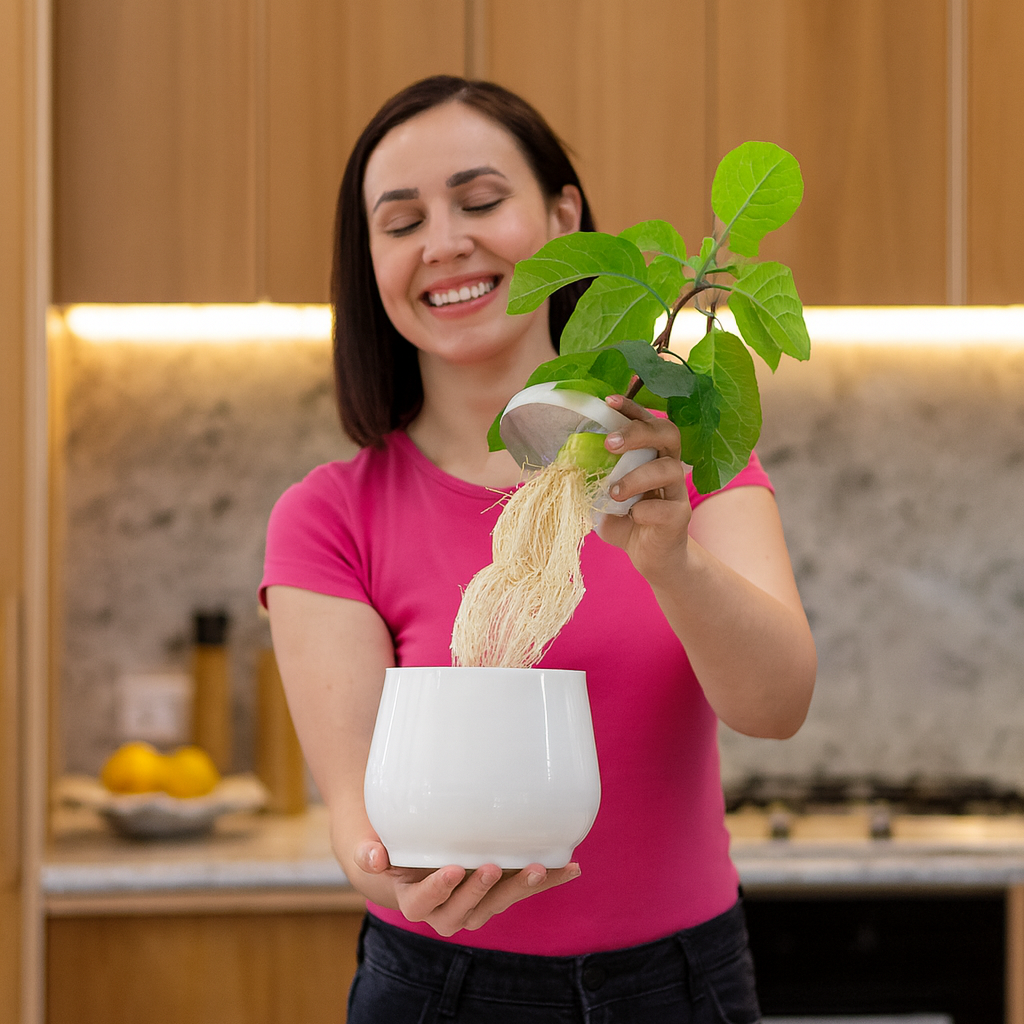
No. The Heirloom Planter is a passive Kratky pot, so there are no pumps and no power. As the water level drops, the roots above the waterline take in oxygen. Just top up the water now and then.

Read how it works in types of hydroponic systems.

Is the Heirloom Planter safe to use outdoors in direct sun?

Yes. The Heirloom Planter is made from aluminium, which will not crack, warp or turn brittle in UV light the way plastic can, so it suits balconies and patios. The outer paint may fade over time in strong direct sun, but this is cosmetic and does not affect how it works.

Which net cups fit my garden?

Our 1.5 inch net cups with algae guard drop straight into the heirloom garden, the 2L Heirloom Planter and the Heirloom Basin used in the Sun Shelf 3 and Sun Garden. They also fit our original grey basins (EcoKitchen, Sun Shelf 1 and 2, Family Farm), but it is a tighter squeeze.

Can I use the Heirloom Basin with my Sun Shelf 1 or 2?

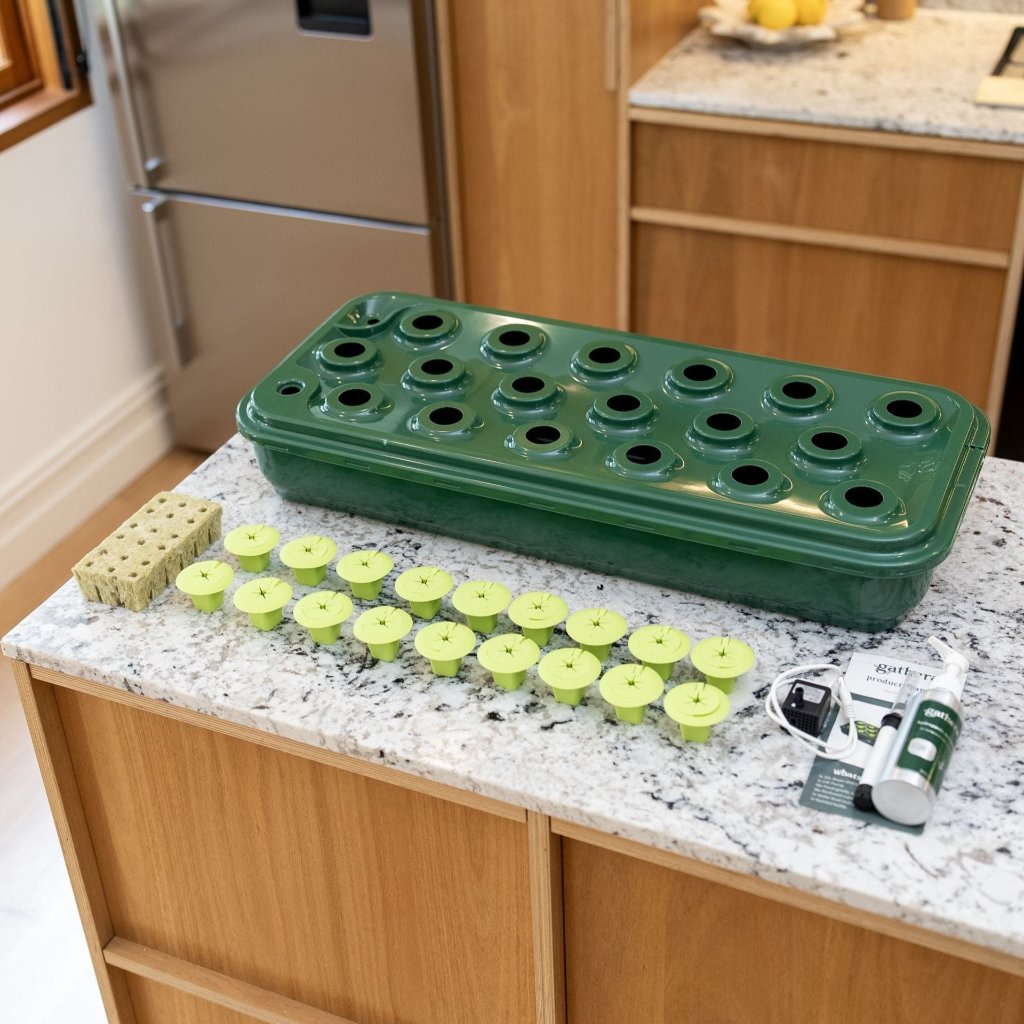
Yes. The Heirloom Basin holds 20L for 18 plants, about 1.1L per plant compared with 500mL in the original basins, so you refill far less often. The silicone net cups also reduce evaporation and algae.

The pump cable will not reach the pump controller on the Sun Shelf 1 or 2, so you will need a 2.1mm DC extension lead of around 50cm to 1m.

Also on: Heirloom Basin

My pump has stopped working. How do I fix it?

Usually the impeller is clogged with nutrient residue or roots, and a clean fixes it:

  • Unplug the pump.
  • Open the side grille nearest the pump outlet.
  • Check the white impeller for debris.
  • Scrub the grille, filter and impeller with a toothbrush, then wash them in warm soapy water.
  • Trim any roots crowding the pump intake.
  • Reassemble, fill the basin with water, then plug the pump back in.

Never run the pump dry, as it shortens its life. On the Sun Shelf and Sun Garden the pump runs on the same timer as the light. Still not working? Contact us and we will help you find a replacement.

How do I stop algae growing in my hydroponic garden?

Algae needs light and nutrients, so the fix is to block the light reaching your growing medium:

  • Use net cups with an algae guard, or cover the rockwool with foil until plants are established.
  • Keep nutrient levels low until seedlings start to shade the medium.
  • Make sure containers are opaque.

To clear existing algae, spray a gentle stream of water from about 1cm away. Read our full guide on how to stop algae growth in hydroponics.

Why is there mould on my growing medium?

Mould likes still, humid air. To prevent it, improve airflow around your garden, move it to a less humid spot if you can, and keep the room around 25 degrees Celsius.

If you spot mould, act quickly: spray a 1:1 mix of water and vinegar onto the growing medium daily until it clears, avoiding the leaves. If it keeps coming back, empty the garden, discard the affected medium and start fresh.

Indoor Smart Garden: how do the light settings work?

The button on the end of the light controls it. Press once for the reading light, press again for the grow light, or press and hold to start the grow light on a 16 hours on, 8 hours off timer. The button glows blue during the 8-hour rest.

If the timer is not behaving, switch the light off for 5 to 10 minutes, then turn it on when you want the cycle to start, and plug it straight into the wall rather than a power board. Still stuck? Contact us.

Indoor Smart Garden: why does it beep when the water is full?

A small float in the basin rises and falls with the water level and triggers the low-water beep. Sometimes the float sticks at the bottom of its tube, so the garden beeps even when it is full. Gently free the float so it can rise to the correct level.

Where can I buy replacement smart soil for the Indoor Smart Garden?

The growing medium we call smart soil is vermiculite, which you can find at most garden centres and nurseries. Choose a fine or medium grade for indoor gardens; coarse grade suits outdoor beds. Learn more in what is vermiculite?

Nutrients and pH

How much nutrient should I add to my hydroponic garden?

Follow the dilution on your nutrient label. Herbs and leafy greens need roughly half the nutrients that fruiting and flowering plants do. As water evaporates, top up with water and nutrients at the same dilution.

For the most accurate results, test with a nutrient meter and check your plant against our plant nutrient chart.

What pH and EC levels do my plants need?

Most herbs and leafy greens grow well at a pH of 5.5 to 6.5 and an EC of 1.0 to 2.0. Every plant is a little different, so look yours up in our plant nutrient chart.

If EC is too high, dilute with plain water. If it is too low, add more nutrient solution. A pH meter helps you confirm your solution is in range.

How often should I replace my nutrient solution?

We recommend emptying and replacing the whole solution every 3 months. Some trace elements build up over time as plants use certain nutrients faster than others. Read more in what nutrients do plants need?

Should I change my nutrient mix in summer and winter?

Slightly. In warm weather plants drink more water, so the solution gets stronger as the reservoir drops: refill with a little more water relative to nutrients. In winter plants drink less, so a slightly weaker mix avoids over-concentrating.

The most accurate way is to check with a nutrient meter before and after each refill. Indoors the difference is smaller, but still there.

Why do the larger nutrient packs come in part A and part B?

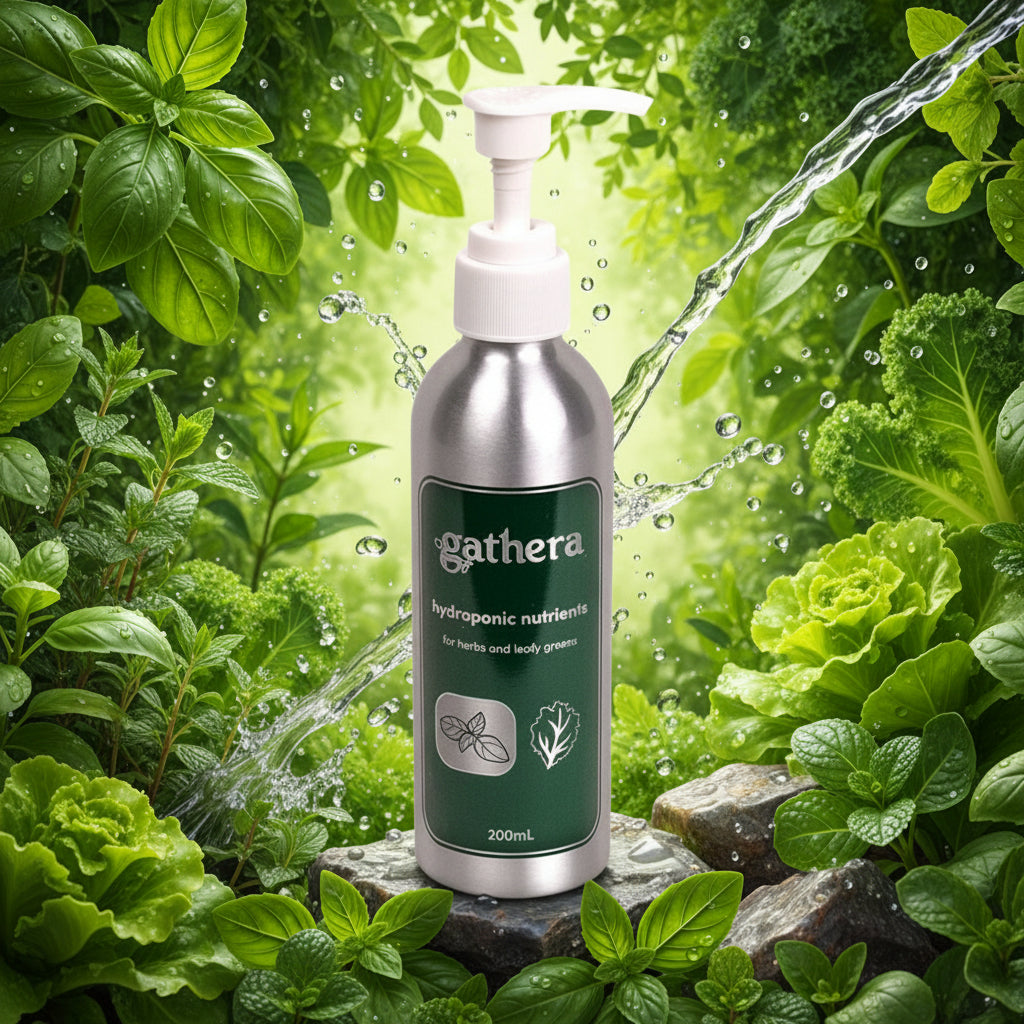
At high concentration, calcium reacts with some micronutrients and forms a powder plants cannot use. Dilute part A in water first, then add part B, so every nutrient stays available to your plants. Our single-part 200mL nutrient is stabilised to avoid this.

How do I calibrate my pH meter?

It takes about two minutes with a pH 7 buffer solution:

  • Pour enough buffer into a small container to cover the probe.
  • Place the probe in the solution.
  • Hold the CAL button for 5 seconds, until the display flashes three times.
  • Rinse the probe with clean water.
  • Discard the used buffer, as it cannot be reused.

For most home growers, calibrating to pH 7 is accurate enough. Keep unused buffer sealed, as it degrades once exposed to air.

Also on: pH Meter

Plant care

How much of my plant can I harvest without killing it?

Wait until the plant has three sets of true leaves (the ones that look like the mature plant, not the first seed leaves). Then use sharp scissors to cut the top of the main stem at a 45 degree angle.

Basil can be harvested again and again, and often grows faster with regular light trims. Lettuce is best harvested all at once, or pick the outer leaves and let the centre keep growing.

Why are my plant's leaves yellow, drooping or crispy?

  • Yellow leaves often mean the nutrient balance is off. Drain the basin, refill with plain water for a week or two, then reintroduce nutrients.
  • Drooping leaves usually point to temperature or water. Check all roots are in water and move the plant somewhere cooler or with better airflow.
  • Crispy leaves are usually too much light. Lower the brightness, raise the light or shorten the timer.
  • Thin, sparse growth can mean a young plant that needs time, or a plant that needs more nutrients.

Why is my plant growing so slowly?

The four most common reasons:

  • Its natural cycle. Days to maturity usually count from germination, which can add a few weeks.
  • Not enough nutrients or light.
  • Over-pruning, which leaves too few leaves for photosynthesis.
  • Cold or still air. Many plants prefer the mid-20s Celsius and gentle airflow.

See our tips on how to make hydroponic plants grow fast.

How do I get rid of aphids on my indoor plants?

Aphids are small green sap-sucking bugs that gather on soft stems and under leaves. To remove them:

  • Spray them off with a strong jet of water.
  • Dunk the plant in a tub of soapy water.
  • Use neem oil on ornamental plants (take care with anything you eat).

To prevent them, be careful bringing outdoor soil or garden plants inside. Sticky traps help you spot flying pests early.

How do I deal with spider mites?

Spider mites are tiny pale yellow or green mites that live under leaves and leave small discoloured spots. They love hot, dry conditions and usually arrive on new plants, so many growers quarantine new plants before bringing them inside.

They breed fast, so wash your plants down twice, 4 to 5 days apart: the first wash removes the mites and the second catches any eggs that have hatched. Submerge small plants for a few minutes, or spray larger ones thoroughly.

How do I keep my basil healthy and bushy?

Basil starts slowly, then takes off around weeks 4 to 5. It likes mild, slightly humid conditions, which can be tricky in winter. Prune it regularly by trimming the main stem just above a pair of leaves: this keeps it bushy and delays flowering.

Read our full guide to growing Genovese basil indoors.

Seeds and germination

How long do seeds take to germinate?

Most seeds show signs of life within 3 to 7 days, depending on the plant and how warm your home is. Typical germination times for our seeds:

  • Genovese basil: 5 to 10 days
  • Coriander: 7 to 10 days
  • Cos lettuce: 7 to 14 days
  • Dill: 7 to 21 days
  • Rocket: 7 to 21 days

Why are my seeds not germinating in winter?

Seeds sprout best when they are warm and humid. In winter:

  • Keep them somewhere warm and stable, or use a seedling heat mat.
  • Keep the growing medium moist but not waterlogged.
  • Add humidity with a dome, regular misting, or a clear cup over each net cup.
  • Check the seed packet to make sure the variety suits the season.

Our greenhouse seedling tray creates the warm, humid conditions seeds love.

Why are my basil seeds turning white?

That is completely normal. Basil seeds form a white gel when they meet water. After a few days they sprout two baby leaves, followed by true leaves about a week later.

Orders and payments

Can I change or cancel my order after placing it?

Orders placed before 10am AEST on a weekday are usually packed the same day, so the window to make changes is short. Contact us as soon as possible with your order number and exactly what you would like changed, and we will let you know straight away if we can.

What payment methods do you accept?

We accept Visa, Mastercard, Amex, PayPal, Apple Pay, Google Pay, Shop Pay and UnionPay. Payments are handled securely by our payment providers, so we never see your full card details.

It looks like I have been charged twice. What is happening?

This is usually a payment authorisation that failed and was retried, so it shows twice for a short time. The extra pending charge is normally released back to your card within a few days. If it has not been released after 7 days, contact us and we will look into it.

Can I use more than one discount code?

No. Our discount codes do not stack, so only one code can be used per order: choose the one that saves you the most. Some codes are only valid for a set period, so check the expiry. Enter your code in the discount field at checkout and select apply.

How do I manage or cancel a subscription?

Log in to your account using the account icon at the top of our site, with the same email you used to order. Open the order that includes your subscription, where you can skip upcoming orders or cancel. Some subscriptions need a minimum number of orders before they can be cancelled. If you do not see the option, contact us.

Shipping and delivery

How much is shipping?

Shipping is free on Australian orders over $159, though thresholds can change during sales. For smaller or international orders, add your items to the cart and use the shipping calculator at the bottom of the cart page, or see the cost at checkout once you enter your address.

How long will my order take to arrive?

Orders placed before 10am AEST, Monday to Friday, are packed and sent the same day. Australia Post delivers most Australian orders: typical times range from up to 2 business days in Sydney to longer for regional and remote areas. See typical times for your postcode on our postage page.

How do I track my parcel?

Your tracking number is in the shipping email we send when your order is packed, not the order confirmation email. Tracking can take up to 24 hours to show movement. If there is still no update after 48 hours, contact us and we will follow up with the courier.

Do you ship internationally?

Yes. Australian and New Zealand orders ship from our Sydney warehouse. UK and EU customers can order from our UK store, which ships from Rochford, Essex. Other international orders ship from Sydney with DHL or Australia Post International.

Import duties may apply and are set by your country. Voltages and plugs also differ overseas, so contact us before ordering if you are unsure a product will work where you live.

Some items in my order are damaged or missing. What should I do?

Seeds and nutrients are often packed inside kit boxes or in a small brown envelope, so check every box first. Some orders also ship in two parts, which will show on your tracking page.

Still missing something, or did an item arrive damaged? Contact us with your order number and a photo, and we will make it right.

Returns and warranty

What warranty do gathera products come with?

All gathera products, including the Sun Bulb, Sun Shelf 3 and our clip-on grow lights, come with a 1 year warranty from the date of purchase. This is in addition to your rights under Australian Consumer Law. If anything goes wrong, contact us with your order number and a photo, and we will arrange a repair, replacement or refund.

How do I return a product?

Change-of-mind returns are accepted within 30 days of purchase if the product is unopened, unused and in its original packaging, with a photo to confirm. Return postage is not refunded and clearance items are excluded. Contact us to start a return, and see our full returns policy.

How will I be refunded?

Refunds go back to the payment method you used at checkout, usually within 3 to 5 business days once processed. If that card is no longer active, contact us and we will arrange another way. If it is taking longer, check with your bank, as some banks hold refunds before releasing them.

About gathera

Why did Urban Plant Growers become gathera?

We rebranded in 2023. Our old name was hard to remember, and "urban" did not fit the many customers growing in regional towns, on farms and in tough climates. The name gathera comes from gathering: living in step with a growing cycle and picking something fresh from your own small ecosystem each day.

still stuck?

Our team is based in Sydney and happy to help with anything from setup to what to grow next.

contact us