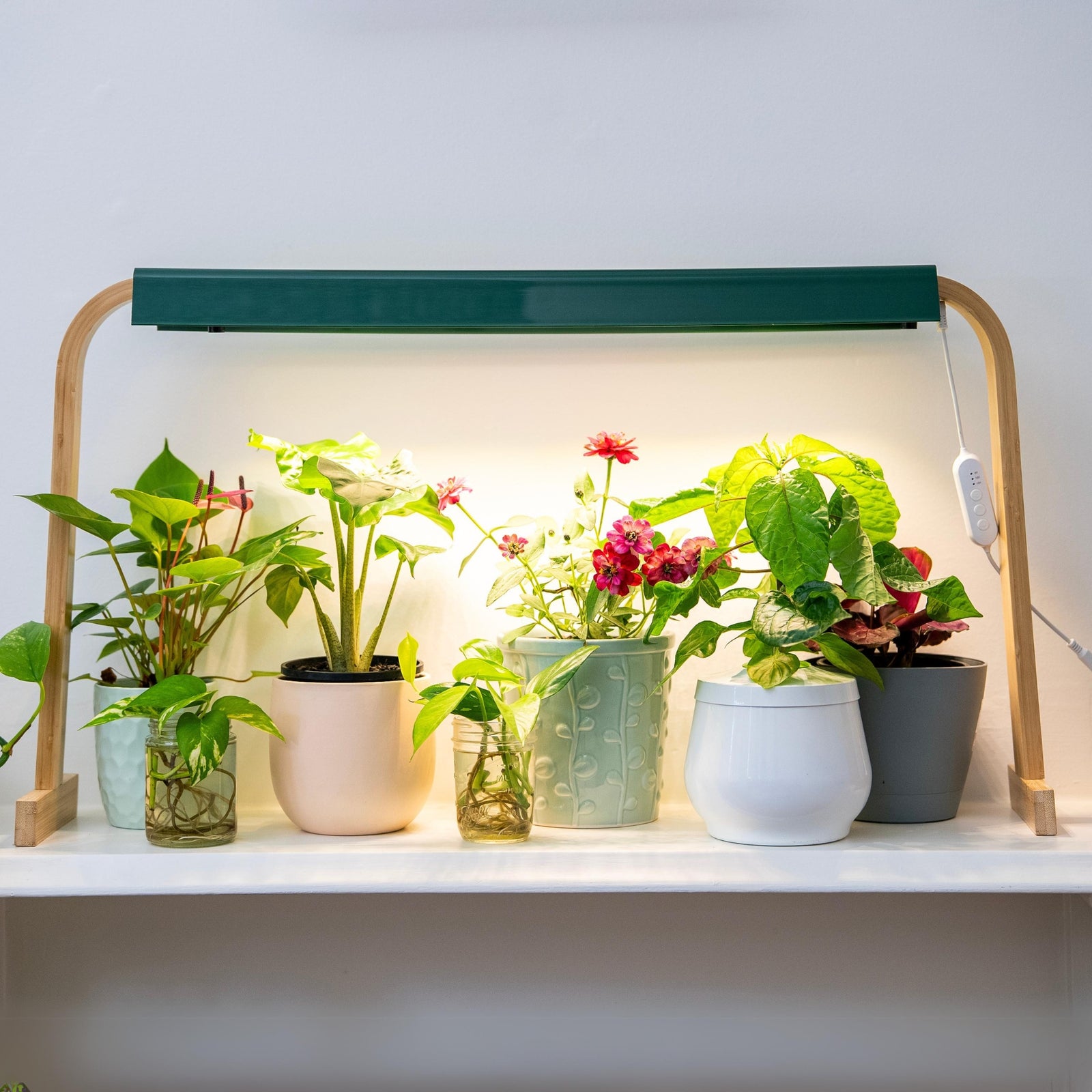
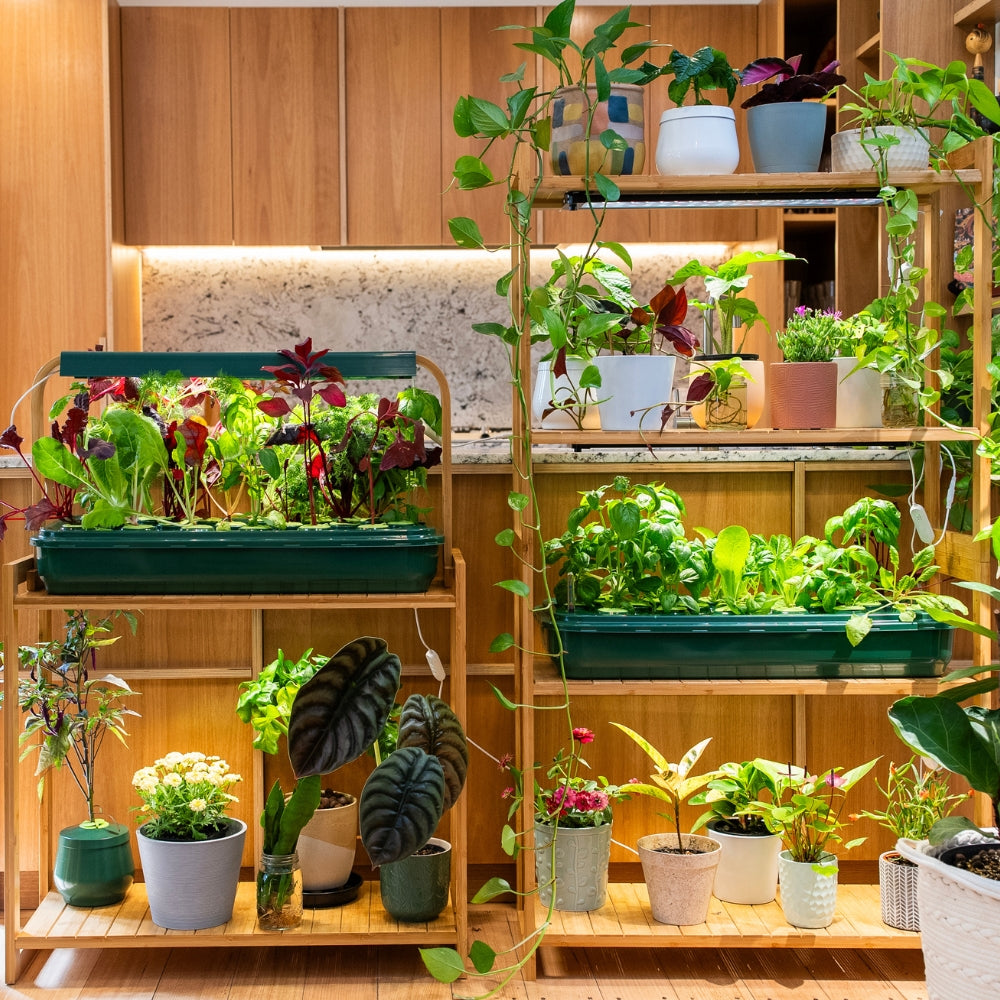
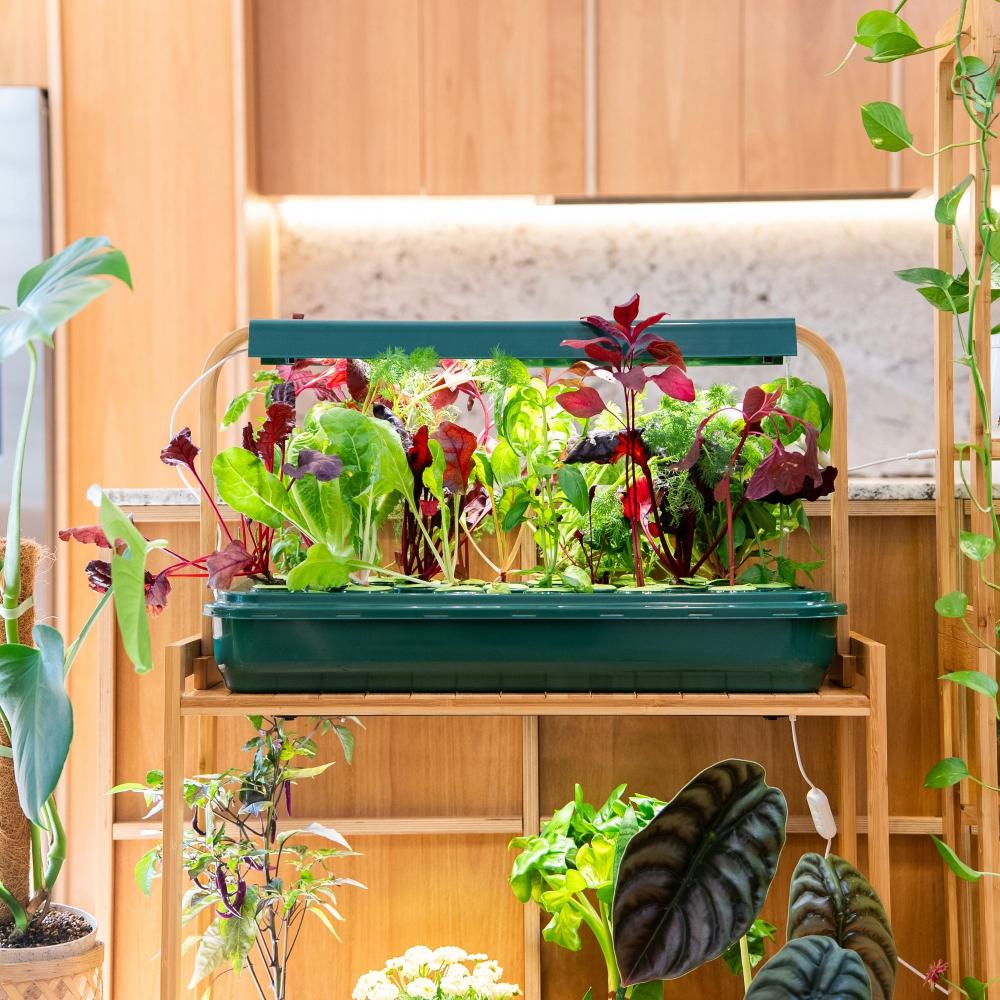
The amount of light a plant needs depends on the plant and where it lives in your home. There is no single exact answer, so the best approach is to start with the guide below and let your plants tell you how they are going.
Light intensity by growth stage
Light intensity for plants is measured as PPFD (photosynthetic photon flux density), in micromoles of light per square metre per second (µmol/m²/s). As a rough guide:
Seedlings and new cuttings: about 100 µmol/m²/s
Rooted cuttings and young leafy plants: about 250 µmol/m²/s
Vigorous leafy growth: about 350 µmol/m²/s
Flowering and fruiting plants: up to about 750 µmol/m²/s
Most houseplants and herbs sit at the lower end of this range. Fruiting plants such as chillies and tomatoes need the most light.
How many hours of light?
Adjust your timer to suit the plant and how much natural light it already gets. A smart plug or timer makes this automatic.
No natural light: 12 hours or more a day
Some indirect natural light: about 6 to 9 hours of extra light
Bright natural light: about 3 hours of top-up light
Plants also need darkness to rest, so aim for at least 8 hours of darkness each day. Light-hungry plants such as basil need more light than shade-tolerant houseplants.
How far should the light be from your plants?
Distance changes intensity: the further the light is from the leaves, the less light the plant receives. A few starting points:
Starting distances and timer settings
Plant
Light distance
Hours a day
Seedlings
About 15cm from the seeds, full power
12
Large indoor plants, no natural light
About 30cm from the leaves
12
Large indoor plants, some indirect light
About 30cm from the leaves
6 to 12
Small indoor plants, no natural light
About 20cm from the leaves, moderate strength
6 to 12
Keep the light at least 10cm from leaves so they do not burn. Start on a dim setting and build up so your plants have time to adjust. Try to mimic natural light: a little distance from the plant or a few shadows is fine.
Signs the light is too close or too strong
Burn marks on the leaves (usually only when the light touches the leaves, or on very sensitive plants)
Crispy or browning edges
Drooping leaves
Leaf colour change
Signs your plant is not getting enough light
Leaves turning pale green, yellow or white
Long, thin, stretched stems
Older leaves dropping
Why use a grow light?
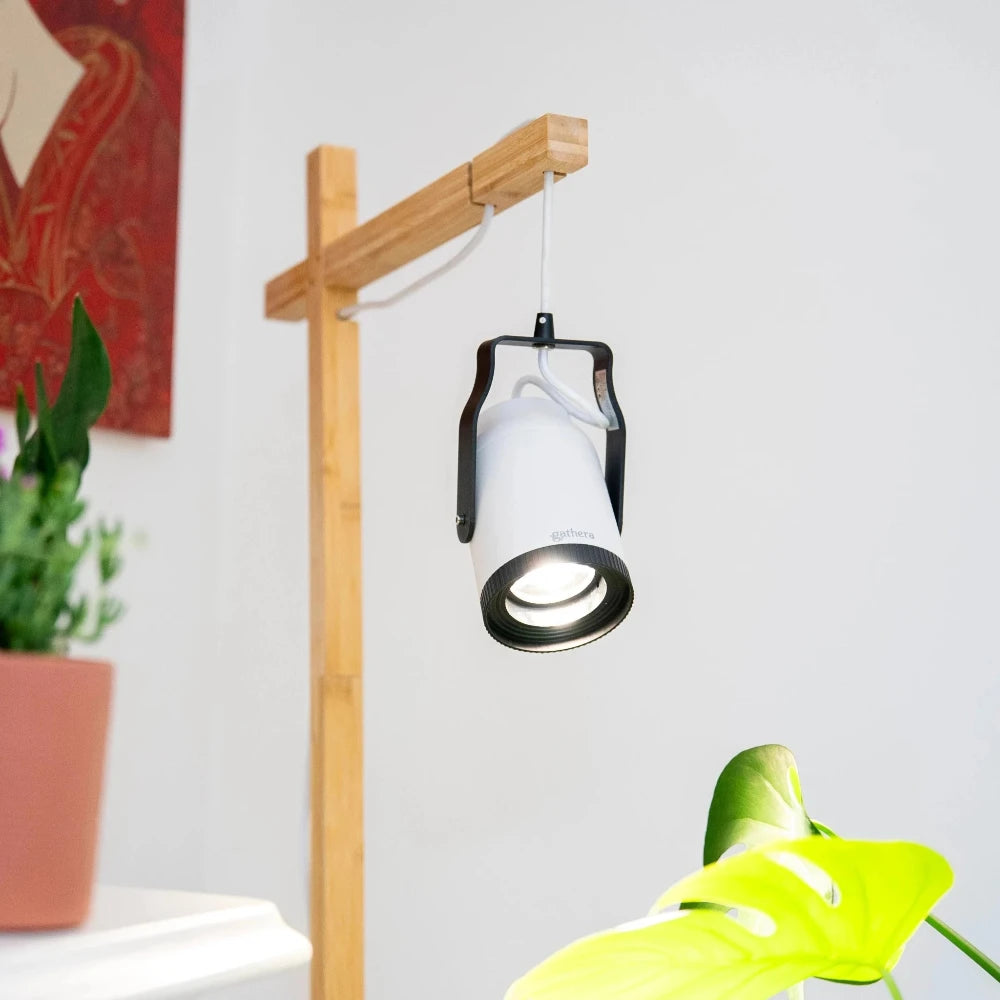
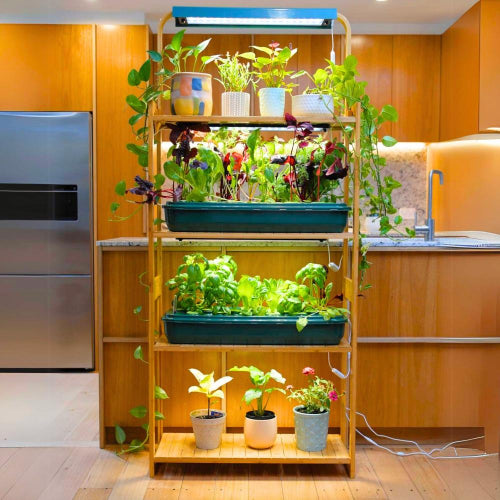
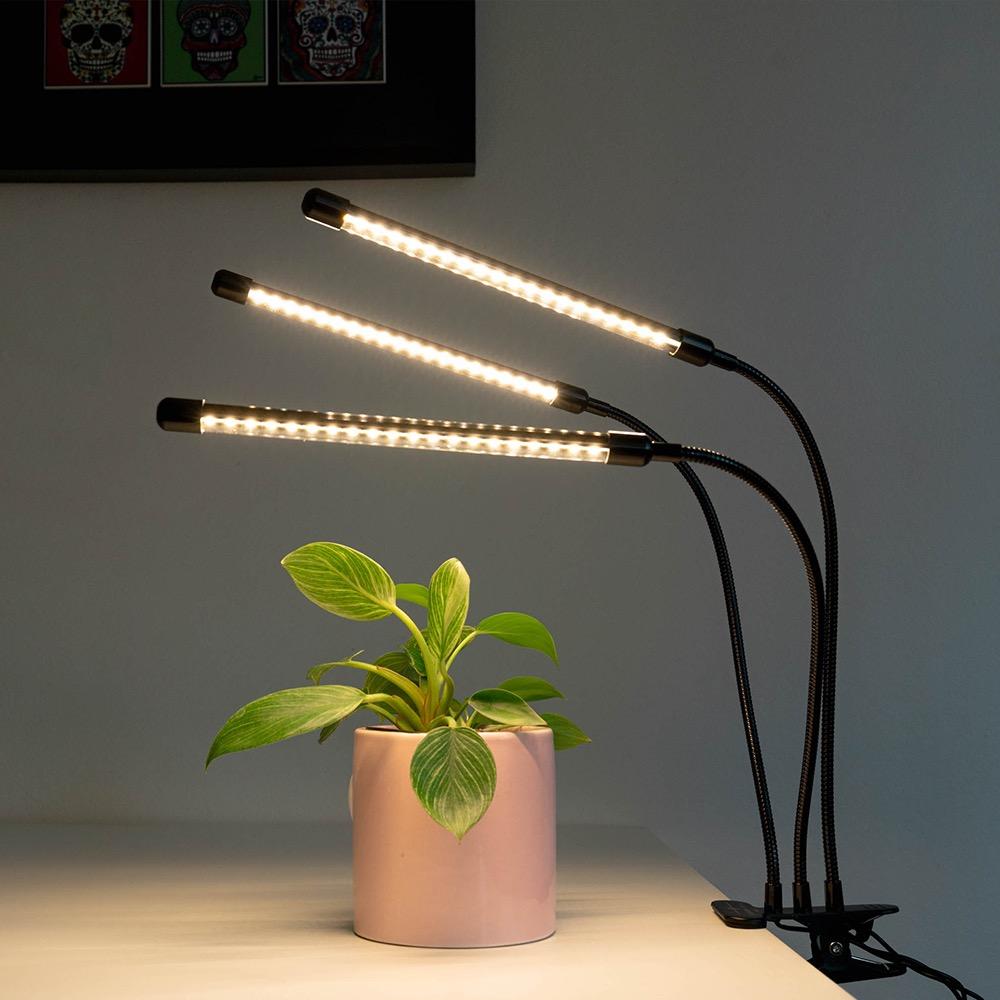
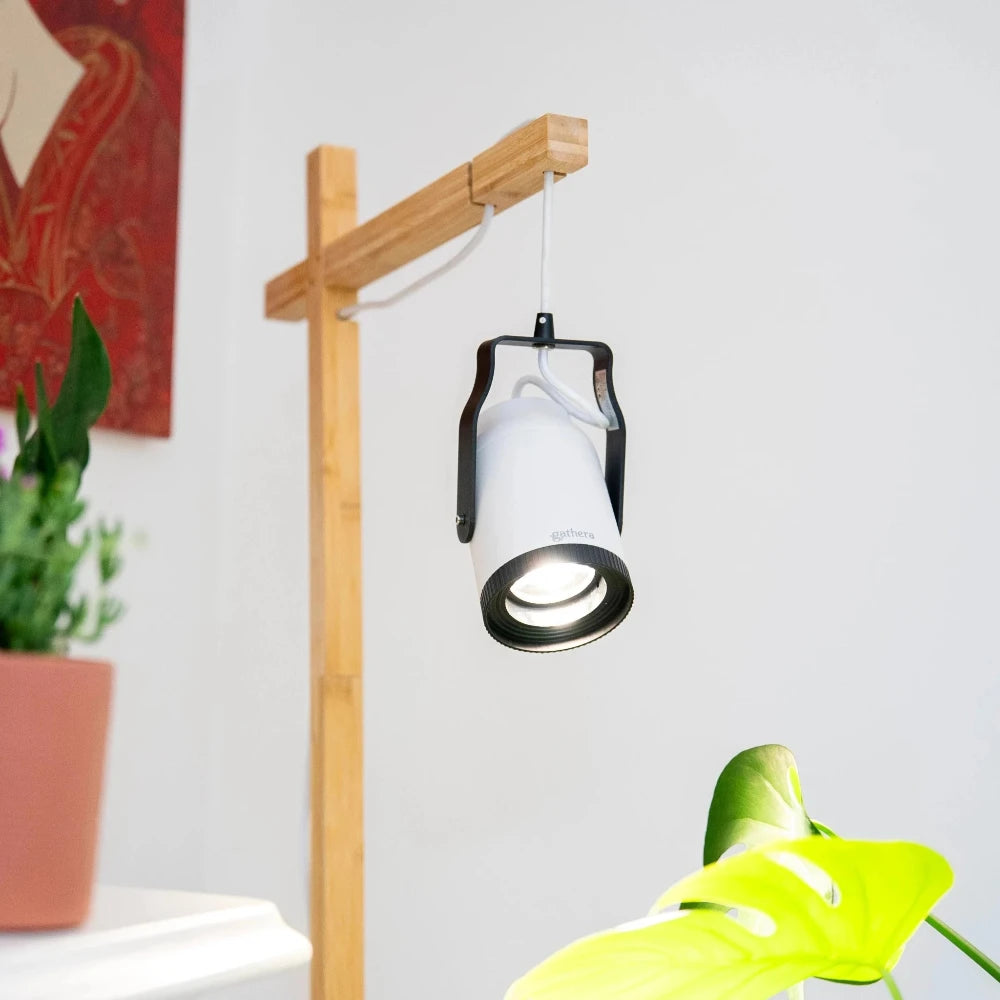
A grow light delivers the wavelengths plants use for photosynthesis, so plants can grow well in rooms with little natural light. gathera's full-spectrum LED grow lights produce a warm white light that looks good in your home and works for houseplants, herbs, seedlings and propagation.