Hydroponic systems have changed the way we grow plants, offering efficient, controlled environments for optimal growth. This guide explores four popular systems: Nutrient Film Technique (NFT), Flood and Drain (also called Ebb and Flow), Deep Water Culture (DWC) and the Kratky method. We break down their differences, benefits and challenges, and the crucial role of oxygen for plant roots.
Nutrient Film Technique (NFT)
NFT involves a continuous flow of nutrient-rich solution over the plant roots. The solution flows through a sloped channel or pipe, creating a thin film that the roots absorb.
How it works
Continuous flow: nutrient solution is constantly circulated through pipes or channels.
Minimal solution volume: only a thin film of solution is in contact with the roots.
Benefits
Efficient nutrient delivery: constant flow gives plants a steady supply of nutrients.
Reduced water use: minimal nutrient solution is used compared with other systems.
Fast growth rates: constant nutrient availability promotes rapid growth.
Downsides
System failures: if the pump fails, plants can suffer quickly from lack of nutrients.
Root health: roots can dry out if the flow is interrupted or too low.
Ideal plants
NFT suits fast-growing leafy greens such as lettuce, spinach and herbs.
Flood and Drain (Ebb and Flow)
A Flood and Drain system periodically floods a grow bed with nutrient solution and then drains it back into a reservoir. A timer usually controls the process, and an overflow valve prevents overfilling.
How it works
Flood cycle: a pump fills the grow bed with nutrient solution.
Drain cycle: the solution drains back to the reservoir through an overflow valve.
Benefits
Oxygenation: during the drain cycle roots are exposed to air, which helps oxygenate them.
Versatility: suitable for a wide range of plants, including vegetables and herbs.
Downsides
Pump dependency: the system relies on timers and pumps, which can fail.
Maintenance: it needs regular cleaning to prevent clogs and algae.
Ideal plants
Flood and Drain suits a variety of plants, including tomatoes, peppers, cucumbers and herbs.
Deep Water Culture (DWC)
DWC suspends plant roots in a nutrient-rich, oxygenated solution. An air pump or air stones provide oxygen to the roots. See dwc-hydroponics.com for more.
How it works
Oxygenation: air stones or a pump continuously aerate the solution.
Nutrient solution: plant roots are submerged in the solution.
Benefits
Rapid growth: constant access to nutrients and oxygen promotes fast growth.
Simple setup: relatively easy to set up and manage.
Downsides
Oxygenation dependence: plants can suffer if the air pump fails or is insufficient.
Temperature sensitivity: the solution must be kept at a suitable temperature to avoid root disease.
Ideal plants
DWC suits lettuce, herbs and small fruiting plants.
The Kratky method
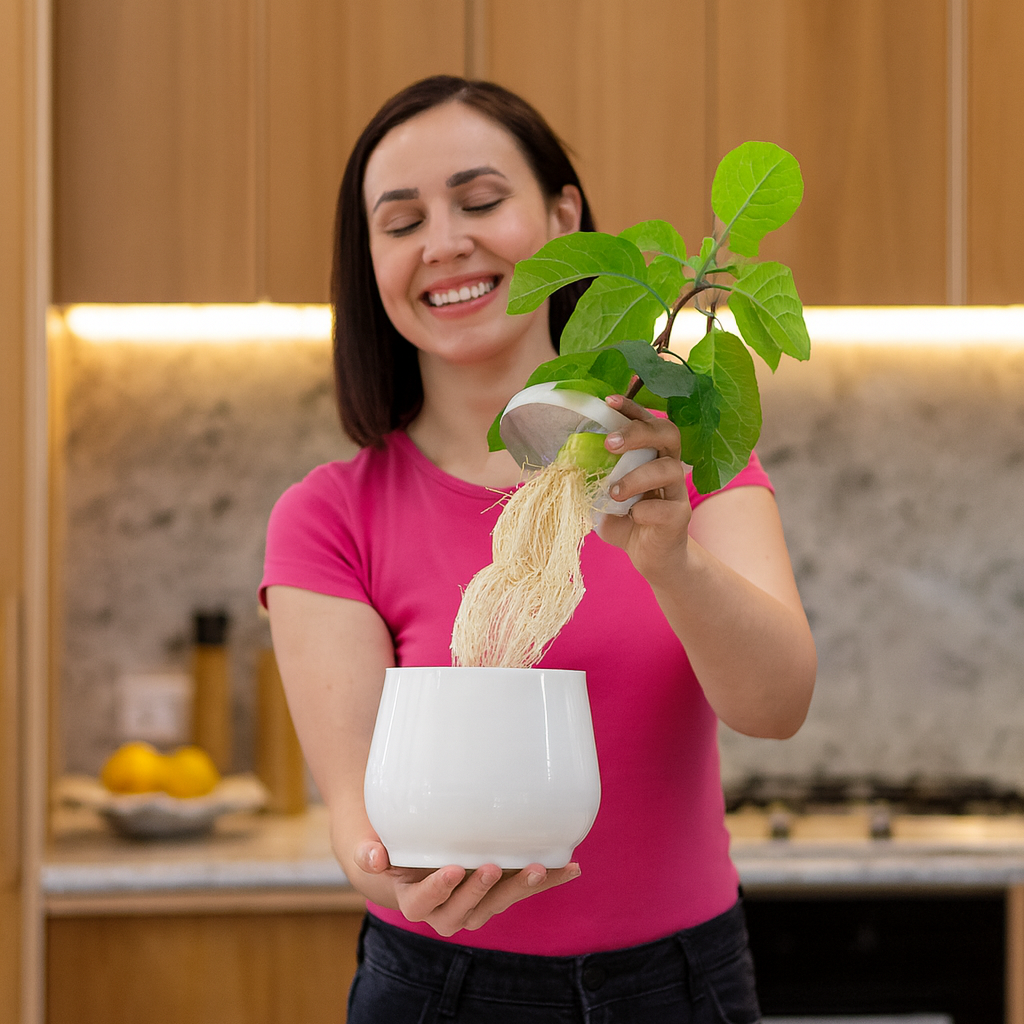
The Kratky method is a passive hydroponic system where plants grow in a sealed container. The nutrient solution covers the roots, and an air gap lets the roots reach oxygen. Our Heirloom Planter is a Kratky-style pot with no pump and no power. See the University of Hawaii guide to non-circulating hydroponics for more.
How it works
Sealed container: the nutrient solution sits in a container with a small air gap.
Oxygen access: roots reach oxygen in the air gap above the solution.
Benefits
Low maintenance: few moving parts make it easy to set up and maintain.
Cost-effective: it needs fewer materials and less equipment.
Downsides
Limited plant size: not ideal for large or heavy plants.
Water management: you need to check that the solution is at the right level.
Ideal plants
The Kratky method works best for small, fast-growing plants such as lettuce and herbs.
The importance of oxygen for roots
Oxygen is critical for root health. Roots need it for respiration, which is essential for nutrient uptake and overall growth. Low oxygen can lead to root rot, reduced nutrient absorption and stunted plants. Each system supplies oxygen differently:
NFT: the continuous flow helps with some oxygenation but can be limited.
Flood and Drain: regular exposure to air during drain cycles provides oxygen.
DWC: air stones or pumps provide constant oxygenation.
Kratky: the air gap above the solution lets roots reach oxygen.
Conclusion
Each system has its own advantages and challenges. The right choice depends on what you want to grow, your budget and how much maintenance you are happy to do. Understanding how each works, and why oxygen matters, will help you choose well. Browse our hydroponic gardens to get started.