















sun panels
instruction manual

the sun panel has been upgraded
We have sold through the original sun panels and released an updated version. This manual refers to the original sun panel only. If you have purchased the new sun panel, it will come with its own instructions.
1
parts
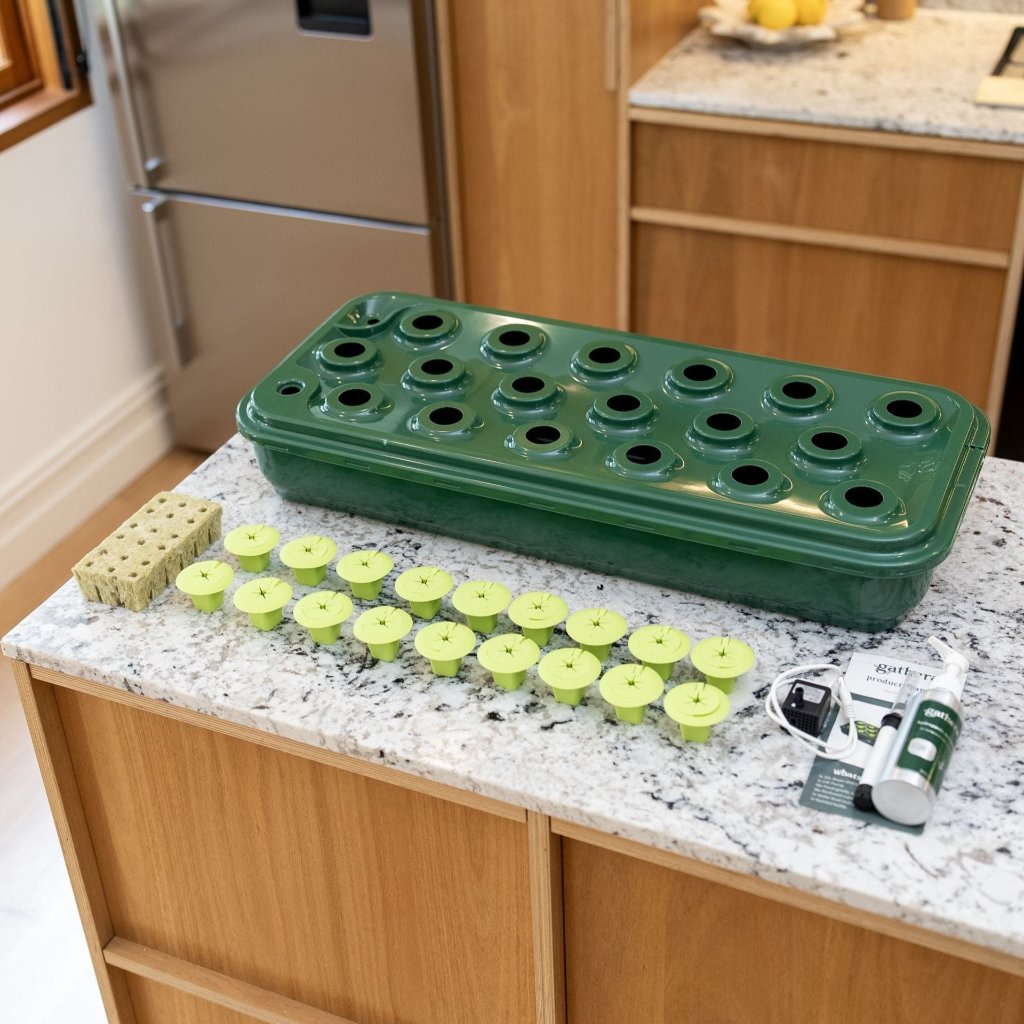
included in the box

a: sun panels
x2

b: controller
x1

c: magnetic screws
x8
sold separately or included with a sun shelf bundle

d: sun shelf and power supply

e: growing basin and pump controller

f: individual 24V power supply

g: regular screws
x8
2
installation on the sun shelf
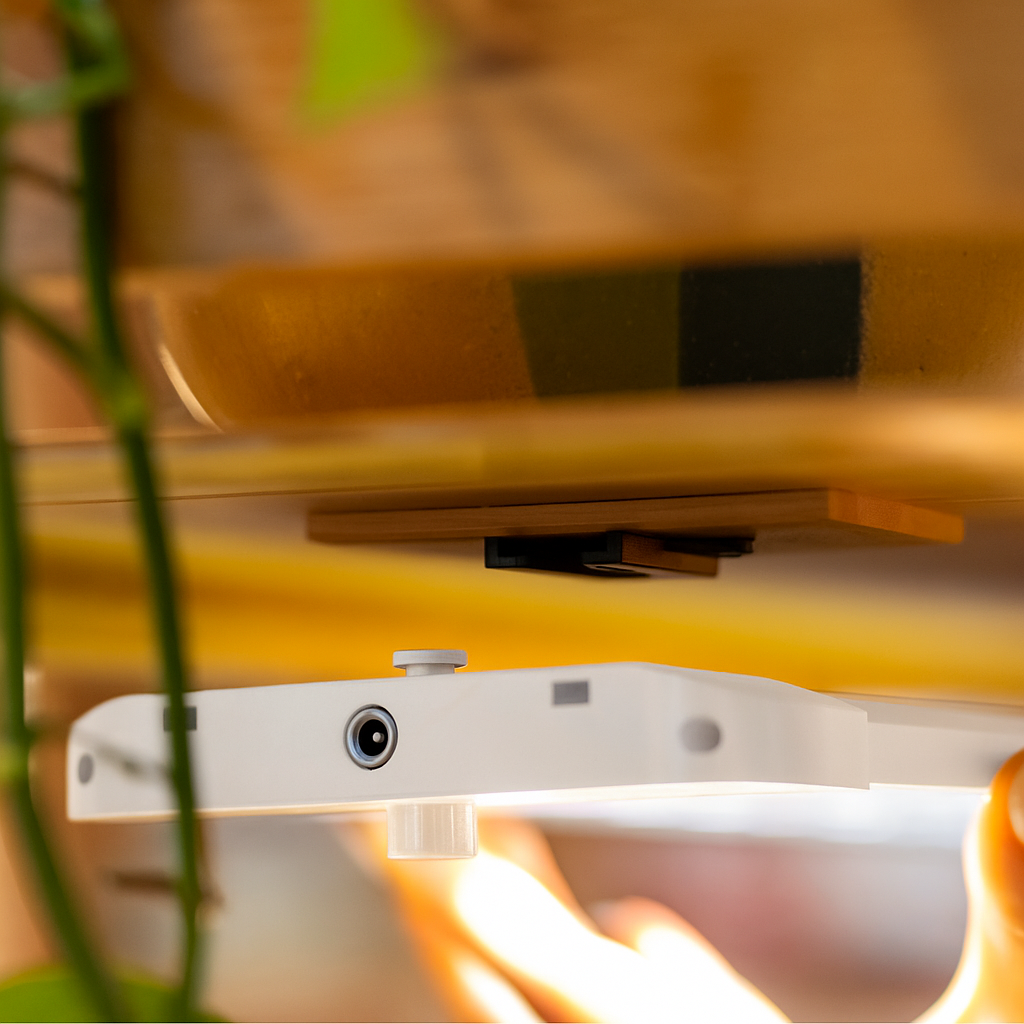
Use the pre-installed magnetic screws c to attach each sun panel to the underside of a shelf d. The magnets click into place and hold the panels firmly without any additional tools.

Watch the full installation video on YouTube

3
power and wiring
The panels are sold in pairs. Panel 1 has three cables and Panel 2 has one cable. Use the table below to connect each cable correctly.
| panel | cable | connects to |
|---|---|---|
| Panel 1 | red | controller b |
| blue | 24V power line | |
| black | Panel 2 cable | |
| Panel 2 | black | Panel 1 black cable |
| Optional | pump controller | Panel 1 extra cable |

Wiring diagram: Click the image below to view the full-size lighting diagram.

4
installation on other shelves
The sun panels are designed for the gathera sun shelf, but they can be installed on any shelving unit using the regular screws g included in the box.
Unscrew the pre-installed magnetic screws c and remove them. Replace with regular screws g and screw the panels directly into the underside of your shelving.
Keep the magnetic screws safe. Store them in case you ever move the panels back onto a gathera sun shelf.

5
individual power supply
If you are not using the sun shelf power system, you can power the panels using the individual 24V power supply f sold separately.

power supply connections
- Main cable connects to the power supply connector
- Plug-end cable connects to the controller b
- Socket-end cable connects to the basin pump controller e
panel connections
- Panel 1 cable 1: connects to the controller b
- Panel 1 cable 2: can be stowed away
- Panel 1 cable 3: connects to Panel 2
- Panel 2 cable 1: connects to Panel 1 cable 3
6
timer
The controller b includes a built-in timer so you can set your lights to turn on and off automatically each day. The diagram below shows all the timer controls and settings.

Recommended schedule: most plants do best with at least 12 hours on and 8 hours off per day.
7
directions for use
We have done the work measuring light intensity at different distances so you know exactly which setting suits your plants best.
too much light
- Burn marks on leaves, most likely if the panel is touching the leaves or your plants are very sensitive
- Crispy or browning leaf edges
- Drooping leaves
not enough light
- Leaves turning pale green, yellow or white
- Dropping of older leaves
- Long, thin, stretched stems


8
how it works
Plants primarily need light in the blue range (400–500nm) and the red range (600–700nm). Most of the light emitted by a standard household bulb falls outside these wavelengths, which is why household bulbs rarely grow plants successfully, as most of the energy is simply wasted.

blue light (400–500nm)
- Encourages photosynthesis
- Produces bushy, compact growth
- Plants don't stretch to find more light
- Ideal for growing in compact spaces
red light (600–700nm)
- Signals it's time to flower or fruit
- Encourages longer, upward growth
- Best for plants heading into their flowering stage
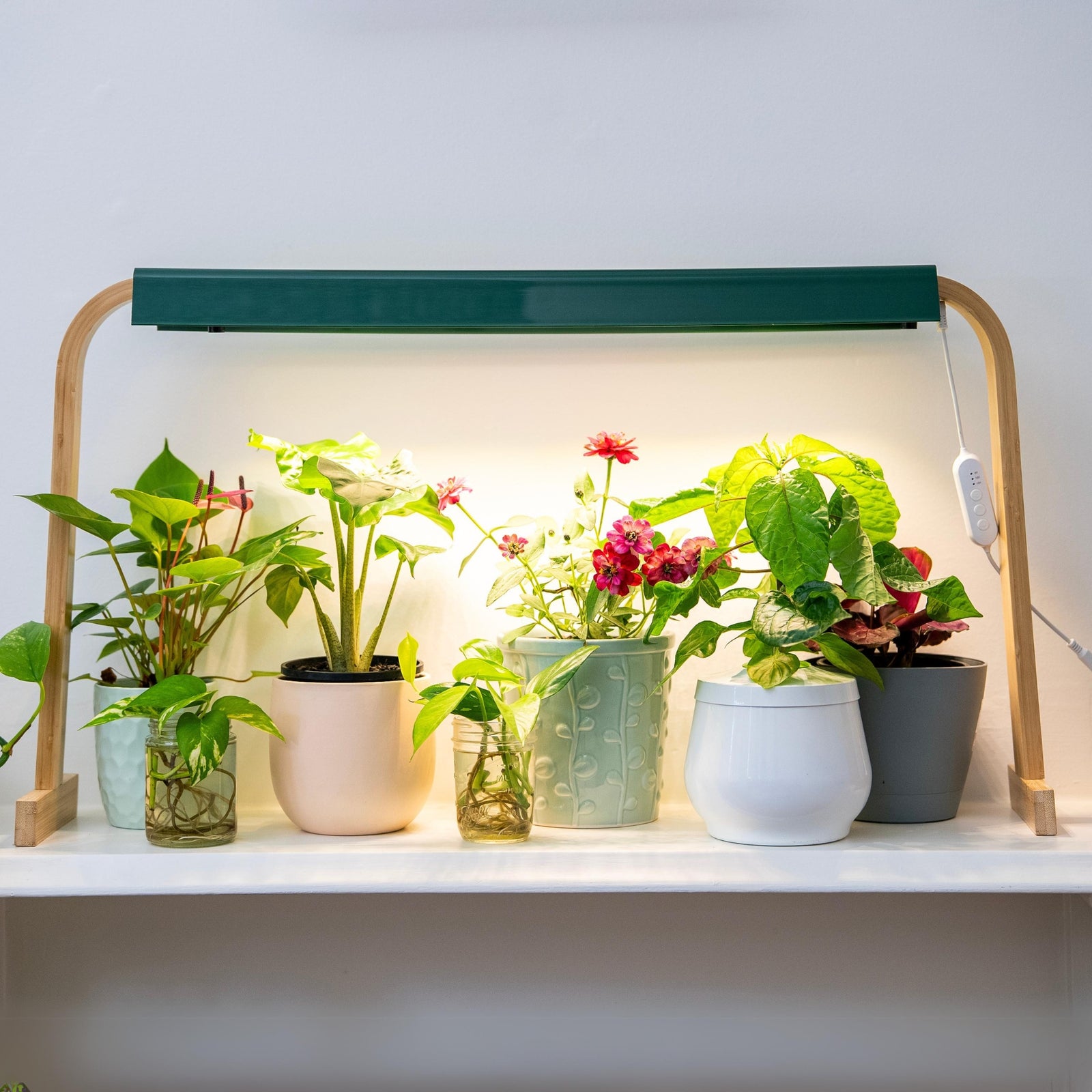
The gathera sun panels use both blue and red wavelengths alongside the full visible spectrum, giving your plants what they need to grow well while producing a warm, natural-looking 3500K light that looks good in your home.